To learn more about how we can help your business grow, please contact our local SEO agency.
Local SEO is one of the most efficient marketing strategies for small businesses. It has helped millions of business owners achieve further success.
Your competitors are using it to try and outrank you right now.
And unfortunately:
It won’t be long before they do if you don’t try to catch up.
So:
What exactly is local SEO? And how can you use it to attract more leads and grow your business?
That’s what you’ll learn in this guide.
Ready?
Local SEO is the process of optimizing your site to attract local visitors through Google or any of the other search engines. It focuses on a minority of nearby customers with local search intent.

Local SEO is mainly practiced by small businesses with local audiences.
For example:
It’s a great strategy for growth in competitive industries.
Why?
Because it focuses on much smaller markets based on the location, and on top of that, the customers it brings are all ready to buy from you.
Almost half of all Google searches are local.
So:
If you’re not doing local SEO, you’re wasting endless growth opportunities for your business.
To understand how local SEO works, we must first answer this:
Why are local customers a gold mine to small businesses?
Here's the deal:
Local customers are easier to attract and more likely to convert. So, local SEO focuses on engaging local audiences and converting them into clients.
For example:
Someone might be looking for a plumber to fix his sink.
The first thing he's going to do is type on Google: "plumbers near me" or "best plumbers in Brooklyn."
Google will then show this potential customer results based on the location.

The customer then gets to choose from the best-rated ones available at the moment.
The best thing about it all?
According to Google, 55% of local buyers are ready to purchase within the hour.
Which means:
Local customers have much higher buyer intent. They’re ready to spend money on your products and services as soon as they need them.
With the right local SEO strategy and optimization, you’re guaranteed to take your business to the next level.
Both local SEO and national or global SEO can help you grow your business.
If you do them right, you'll attract many more customers than you can handle.
But:
The difference is in the targeted locations and growth strategy.
Global SEO focuses on ranking on a worldwide scale and attracting new global visitors.
On the other hand:
Local SEO aims to bring only local customers.
Now, you must be wondering:
Global SEO will bring me more customers, shouldn't I focus on it instead?
For small businesses, that's not the case.
Global SEO is super competitive. It's hard to do when there are thousands of businesses like yours trying to do the same thing.
And:
It's more expensive to start with and keep up with for a long time. And that's why you should focus your marketing efforts on local SEO.
Despite the many differences, local SEO is a lot like global SEO.
You’ll apply lots of global SEO practices to attract more organic local customers.
However:
There’s still a lot of uniqueness in local SEO ranking factors.
For example:
You’ll inform search engines of your availability and operating locations. And you’re going to prove the authenticity of your products and services with reviews.
Now, we’ll share with you six local SEO techniques to dominate your local market.
Let’s get started.
Google My Business (GMB) is Google’s official business listing that allows local businesses to rank locally.
It’s the first step in doing local SEO.

By creating a GMB account, you’ll manage how your business appears in Google search. You’ll expand your local presence and attract the right customers for your business.
We have a complete guide on how to get started with Google My Business.
You’ll learn how to create your account and get it verified. And we also share essential tips on how to keep your GMB profile optimized.
The important thing to know here is this:
Always keep your business details updated. And, be sure to use consistent information across the web.
NAP citations are essential to improving your local rankings.
They establish you as an authority in your industry and make you look more authentic.
So, before we get to how you can do that:
What is a NAP citation?
A NAP citation is an online reference to your main business details, including your business Name, Address, and Phone number.
That's where the term NAP comes from.
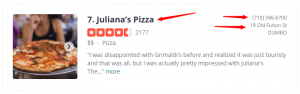
NAP citations improve your local business rankings in the SERPS. That's because Google uses those details to identify your business across the web.
The more citations your business has, the higher it's credibility.
Also:
Since your company is listed in many business directories, you'll get lots of direct customers to your website.
Now, to build business citations, you must submit your company to online directories.
The popular online business directories are:
You can also search for local business directories and get listed there.
Be warned:
Your NAP information must be consistent across all business listings.
Use the same business name, address, and phone number.
The only way for search engines to identify your company is through those details. Changing them many times across different websites will cause trouble for your maps listing.
Don’t sacrifice your rankings and local SEO efforts due to such minor mistakes.
The majority of local search queries come from mobile. Thus, mobile-friendliness is a important ranking factor.
Ask yourself:
When was the last time you came across a website in the search results that wasn't mobile friendly?
You probably can't remember the last time.
Your website must be mobile-friendly to offer your visitors the best user experience.
Thankfully…
Google offers an easy tool to help you test the mobile-friendliness of your site.
First go to:
Mobile-Friendly Test, then enter your website.

Within a few seconds, you’ll get your results.

If your website is already optimized for mobile, then excellent!
You can move to the next step.
If not:
Check the report on the page to identify the errors and issues with your website. Then, you can hire a web developer to help you optimize it to support mobile devices.
Reviews make a huge difference when it comes to local SEO. They’re one of the first ranking factors for search engines.
On top of that:
They encourage potential clients to work with you once they come across your services.
Reviews are a critical trust factor that consumers consider when searching online.
Potential clients will often choose who to call or who to visit based on review history.

So, work on getting more reviews on your Google My Business listing.
How to do that?
Just ask.
When you finish working with a customer, ask them nicely to leave a review about the service you provided. But, make it super-easy to do so.
For instance:
You can send them a direct link via email that they can use to access the review page.
You should also know that replying to reviews is essential. It proves you care about your customers.
So, try to reply to any reviews you get, whether positive or negative.
Local backlinks tell Google that you are popular in the area. And they’re more effective because they’re specific to the location you operate in.
The secret to succeeding in this technique is:
Build good relationships with local businesses in your area.
Start with the ones you already know. Then, try reaching out to others that might be into collaborating.
You’re an expert who will bring value to the local community. Everyone will want to work with you on creating insightful content.
Here are some other ways you can build local backlinks:
This might seem obvious.
Yet, the majority of local business owners aren’t doing it.
Content will always be the solution to growing your company. It helps you rank better and attract more visitors to your website.
All you have to do is share your expertise and knowledge with local audiences.
Also:
Be sure to apply the best on-page SEO practices. And keep your content organized into a clear text hierarchy.
Begin by publishing valuable content that helps people overcome their challenges. Then, make it appealing to local audiences by targeting local keywords and search terms.
And remember:
Consistency is key.
Local SEO is the best way you can grow your business in today’s economy. Yet, it may not be long before your competitors use it to dominate your local market.
So, what are you waiting for?
Start today by applying what you learned in this guide.
Need help expanding your local presence with SEO?
We’re at your service. Don’t hesitate to call us at 800-280-2749.
The Internet is mission critical for operating a business in today's digital world and online traffic is the OXYGEN that fuels business success.
SEO or Search Engine Optimization is one of the best ways to obtain online traffic for business. The end result of a well-executed SEO campaign is that your website will rank high in the search results for relevant keywords and phrases, which will drive quality traffic to your business.
There are no secret SEO tips that your competitors are using to rank over you in the SERPs.
Search engines want to give a fair chance to everyone to succeed and get high rankings. And Google has always given us clear clues about what we can do to boost our SEO rankings.
That leaves you wondering:
What are those clues? And how can you implement them to see quick results with your business website?
That's exactly what we'll teach you today.
In this guide, you'll learn seven proven SEO tips to grow your traffic and how to apply them on your website.
Let's dive in.
Content should be the starting point to any webmaster looking to grow his or her business the right way.
Google loves its users and wants to serve them the best results, and it will love you too for publishing valuable content that helps others.
There are endless questions your audience might have in mind. And they want to find answers to those questions as fast as possible.
For example, a potential customer might be looking to learn how to overcome a challenge or how to make a well-informed purchase decision.
What seems like common knowledge to you is a gold mine for your customers. And no matter what your business is, there is a lot of value you can offer.
You can produce any type of content you want, including written words, videos, podcasts, etc. Each method is valuable in its own way. Some methods work well with specific niches.
But the general idea is the same:
You must provide value.
If you don’t know where to start, think of the most common problems your customers face. Then, create content around the solutions and how they can be implemented.
The importance of keyword research has always been a point of debate among SEOs.
Some experts say that without keyword research, your content will never see the light. Others believe that keyword research is a waste of time and say that you should instead spend your time producing lots of content.
Both parties are right in one thing and wrong in the other.
Keyword research is crucial because it guides you into understanding your potential customers. It helps you get a better idea about their needs and struggles, which allows you to meet them where they are with your content.
But at the same time...
Many keyword research tools are inaccurate with their data. They'll give you unspecific estimates around keyword difficulty and search volume.
So, our advice when it comes to keyword research is this:
Look for keywords that have enough search volume, that are not too competitive, that you can write about in a unique voice.
Next:
It's time to sit down and churn out quality content about the subject. Don't obsess over keyword density or exact match keywords. Google has evolved a lot in recent years.
Now, the algorithms can understand search term variations in any way you write them if it's the same theme.
Of all the SEO techniques in this list, link building is the hardest one to do, especially for beginners.
But...
As difficult as it is, it's a technique that you must learn if you want to rank better.
The process is a bit more complicated than how we're going to explain it. But this is a useful simplification as it will help you understand how backlinks work.
Backlinks are links coming to your site from other websites. They pass link juice to your domain to make it stronger and more authentic.
Search engines will then use those links to estimate the strength of your domain in the SERPs. And the stronger your site is, the higher your Google rankings will be.
There are many techniques to build backlinks, and it all depends on your growth strategy.
You can, for example:
Internal linking is kind of similar to link building.
But:
Instead of the links coming from other websites, they'll be internal pages on your site linking to each other.
Internal linking is a great way to connect all your pages together, which allows spiders or bots to crawl your website more efficiently.
Think of it this way:
Since all your pages are linked to each other, a single bot will visit one page and end up crawling your whole site. That improves your site indexation speed and gets your content to appear faster in the SERPs.
Internal links also have link value. And they can help you boost your rankings in Google. Site pages with many internal links coming to them will get you better rankings.
Also:
Internal linking helps you keep visitors longer on your website. A potential customer may land on a post in your blog and end up reading multiple articles around the subject.
Now, you may be wondering:
What's a good strategy to link all my pages together?
Keep things simple.
Be sure to have at least one link leading to each page on your website, and another one leaving from it.
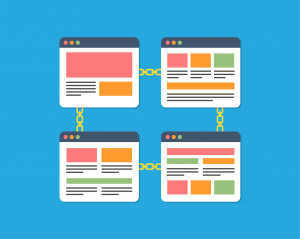
Meaning:
Each page you publish must be linked to another page, and it must receive a link from another different page.
This way, you'll create a big loop that interlinks all your content together and covers every single page on your site.
This one might be obvious, but we've seen many webmasters neglect it in the past.
You must optimize your web pages for SEO in order for you to get the highest rankings on Google. The process includes a few simple techniques that will become second-hand knowledge as you do them more and more.
Here's a list of the most crucial on-site SEO practices:
Google wants you to optimize your web pages this way because that helps their algorithms serve more accurate results. And the reward for you is huge boosts in rankings and highly targeted traffic.
An on-page ninja SEO move that you can use is to create a relevant video that would fit well the content on the page. Once you’ve created the video you can perform SEO to rank the video the main keyword that you are targeting for that page. Then you’ll need to embed the video somewhere on the page. This will give you a boost in your rankings for that targeted keyword.
According to Statistia, mobile devices accounted for 59% of search traffic in the United States in 2019. And those numbers are only going up.
Search engines have always valued the importance of mobile traffic.
What this means is:
If your website isn't mobile-friendly, more than half of your traffic will be lost. Even worse, Google won't even give you rankings once the robots see that your website doesn't serve mobile users.
If you're wondering what mobile friendliness is, it's simple:
A mobile-friendly website is a site that changes its' design and functionality to fit smaller screens. That helps mobile users have a great user experience without sacrificing any value.
There is a free tool on Google that you can use to test your website for mobile-friendliness.
First, go to Mobile-Friendly Test.
Enter your website URL and wait for a few seconds. And the tool will scan your web pages and give you the results.
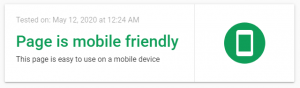
If you get a green text, it means that you’re good to go.
If not, here’s what you’ll get in the results.
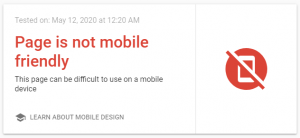
The best thing about this tool is this:
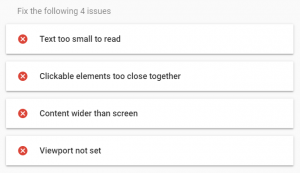
You'll get a full report about your website if there are any errors. And that will help you understand the problems with your design and how you can fix them.
Website speed is a huge part of providing great user experience.
Ask yourself:
When was the last time you waited for a web page for more than 10 seconds to load?
We all click away when a site takes long to give us what we're looking for.
Google is all about user experience.
That's why, in today's SEO, page loading speed is a crucial ranking factor. If your website loads fast and gives users what they want, you'll be one step closer to being able to rank well.
If not, you'll never hit page #1 in the SERPS.
To test your site loading speed, go to Pingdom or GTmetrix.
Next, enter your website URL and wait for a few seconds.
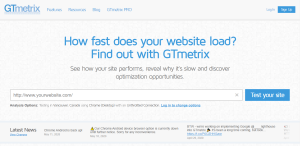
Your results will come back with everything you need to know about improving your site speed.
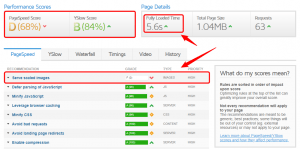
Get this:
If you're using WordPress, everything you have installed on your website matters. Your themes and plugins play a major role in loading speed.
So, try to stick to a quick-loading, error-free theme that goes with your brand. And be sure to install the minimum number of plugins possible.
We've given you everything you must know to grow your traffic! Now it's your turn to do the work. Follow the SEO tips from our list above. And then, it all boils down to consistency in providing value.
Ready to take your business to the next level with the best SEO agency in the Midwest?
HighMark SEO is a team of dedicated professional marketers and SEOs. And we'll guide you through each step of the process until we hit your goal.
Get started now by scheduling a call with us here.
Voice search is a new trend that seems to be the future of digital marketing. With that, massive changes in consumer behavior are happening at the moment.
Millions of voice assistants are sold around the world each year.
27% of online users are actively using voice search on mobile, according to Google. And in a recent report by PwC, 64% of voice-enabled device owners between the ages of 25-49 use them every day.
That's why you need to get your business ready for this new era so you can have the edge over your competitors.
In this article, you'll learn everything you need to know about voice search and how it can help you achieve further success with your business.
Let's get started.
Voice search is a speech-to-text technology that allows users to find information by talking instead of typing.
It's a new function that came to the scene with the development of voice-enabled devices.
And ever since, it has become popular among consumers due to its practicality and ease of use.
Any user with voice-enabled technology can use voice search to find answers quickly.
Once they're connected to the device, they could ask a question just by talking.
Their voice assistant will transform the speech into text through its algorithm. Then, it will get the answers from various sources and ensure its relevance.
Finally, the answer is read to the user within a matter of seconds.
And all of that happens without a single click.
Voice search optimization is the process of optimizing your website to dominate the results for voice searches.
There are four popular voice assistants in today's market:
They pull data from different sources and serve different kinds of answers depending on the query.
For example:
Siri is more specialized in answering specific questions about locations, brands, celebrities, etc.
Google Assistant, on the other hand, pulls its data from Google Search. Thus, it's able to answer all types of queries, no matter the question.
The goal with voice search optimization is to get your website ranking high for voice search queries so you can attract more leads to your business.
55% of households in the US are expected to own a voice assistant by 2022, according to Juniper Research.
Want to know the reason?
It's simple.
Most internet trends are driven by the development of new technologies to allow their execution.
A few decades ago, we didn't have the powerful speech recognition technology to allow for accurate speech-to-text conversion.
But in recent years, we've seen many virtual assistants with advanced voice software.
Once we had the technology, it was time to try it out.
And that brings us to the real cause.
The main reason voice-enabled technology was greeted with open arms by consumers is that it saves them time.
Anyone can get an instant answer about any topic they want — just by uttering a few words.
The way we search by talking is a bit different from how we search via text.
First:
With voice search, the phrases are more conversational and come in the form of questions.
Consumers talk to voice assistants as if they were talking to another human being.
Meaning:
Instead of a user typing "running shoes for men," they'll say, "Hey Google, what are the best running shoes for men?"
Which brings us to the next point:
Longer keywords.
With text search, most queries are shorter than three words and are more focused on the main keyword.
For example:
Users will type "glucose test" to find answers. But with voice search, they would say, "How can I get tested for diabetes."
Finally:
Most voice searches today are location-based and come with queries like "Best X nearby."
And those are all potential customers ready to work with you because they know what they want.
You must jump on the voice-interaction bandwagon early so you can easily dominate the results.
It's now time to get your website and business optimized for voice search.
Ready?
Most consumers are using Google Assistant to find results. So, Google search is a great place to start your optimization.
Featured snippets are small parts of your pages that Google pulls to show in position zero.
They're intended to give a direct response to users, so they don't have to click on your link and visit your website.
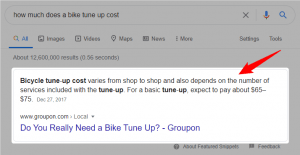
Each time a consumer uses voice search to find an answer, they'll be more likely to visit your website to learn more.
Better yet…
They'll regard you as an expert in your industry since you've been so helpful to them from the start.
That's why you need to leverage structured data to create featured snippets for your website.
Users talk to voice assistants as if they were asking a friend about a piece of information. Therefore, voice queries are much longer compared to text search.
So:
Why not meet them where they are and focus on long-tail keywords?
Don't focus your long-form articles on a few main keywords.
Instead:
You could cover more on your website by breaking down those long articles into smaller ones. And for each article, you'll find relevant questions to answer in your own words.
Once Google sees that you understand search intent and what potential costumers are looking for, you'll get higher rankings.
This approach makes it easier for you to rank higher for less competitive keywords.
And that generates a lot more leads to your business.
As we mentioned earlier, voice search predominantly comes from mobile devices. Google has been on a journey for the past decade to provide the best mobile experience to its users.
So, you know where this is going...
If you want to claim high rankings in the SERPs, you need a mobile-friendly website first. And it must serve mobile users the best experience.
To make your website more user-friendly, you need:
The second important part of mobile UX is page loading speed.
If your website takes too long to load, every visitor you get is going to leave within the first ten seconds.
So, be sure to test your site loading speed and optimize it to load faster.
To take user experience to the next level:
You must break down your texts into short, readable paragraphs with lots of whitespace around.
You can also include images to break down your sections and give readers some rest time from reading.
The best part about voice search is this:
Local searches bring potential customers with the highest buyer intent. Most consumers use voice search to find nearby businesses to help them solve a problem.
But this time:
You won't only be focusing on Google Assistant.
All voice assistants can drive new clients to your business once you claim high rankings. And they'll provide users with your business information instantly.
First:
You need to get your business listed on popular business directories such as Yelp, Foursquare, CitySearch, etc. That's where most voice assistants pull their information from.
Remember:
You must have consistent NAP information through all listings to maintain your credibility.
Next:
Be sure to choose the right categories in your Google My Business listing as that allows algorithms to find your business easily.
Also:
Try getting more positive reviews on your business profiles online to establish trust. It's an essential factor to help you outrank local competitors in a short time.
Want to learn more about these steps?
Check out our comprehensive local SEO guide to learn more about how to implement more techniques step-by-step.
Every successful business today that's doing content marketing focuses on two things:
The two aspects should work together to help your site claim better ranking spots and generate new leads.
Valuable content is often informative and helpful to users in the awareness stage.
It answers basic questions and user queries in FAQ articles. But, it does that by providing unique insights and high-quality information.
For instance:
You can gather lists of questions your potential customers often search for and put them all in one post.
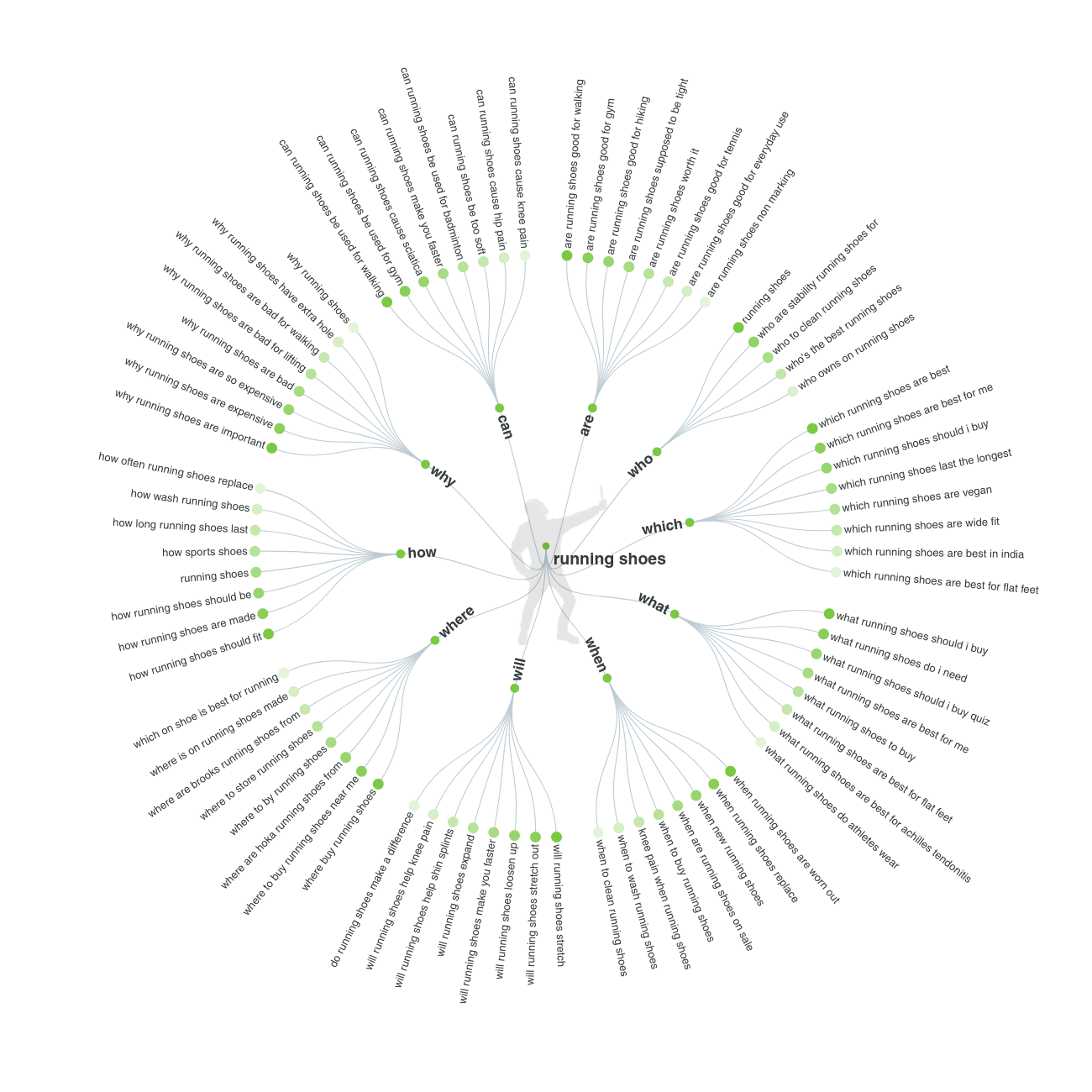
To find such common questions, you can use Google, AnswerThePublic, or Quora and search for your main keyword.
Here are the results for "running shoes" on AnswerThePublic:
Want to know the secret to increasing engaged reading time?
Sorry to burst your bubble, but there isn't really a secret.
It all comes down to this:
First, you need to maintain a friendly, conversational tone throughout all your posts. Stay away from using too many salesy words or industry jargon.
The average online reader can only keep up if the readability grade is 7-8 grade or below.
Next:
You must write in the human language that people use to talk to each other every day.
The days of formal writing are ending with more writers getting into blogging. So, keep your vocabulary simple and easy to understand.
Most importantly:
Be consistent in creating your content for your business. It's the best way to keep both people and Google bots coming back to your website.
Now that you understand the power of voice search, it's time to take some action and be an early adopter.
You must get your business ready for the next big trend. Follow this guide to implement the strategies and claim better rankings for voice search.
Ready to grow your business online with the help of an SEO agency in the USA?
Call us now at 807-890-1909 or schedule a call at your convenience.
Email is one of the most popular means of digital marketing today. It has been around for decades, which makes it an ever-developing strategy that involves lots of trial and error.
You're bound to make lots of mistakes that will cost you time, effort, and money as an email marketer. And that opens doors for your competition to win.
If you're in such a position, don't worry! This guide is for you.
In today's article, we'll learn nine powerful tips to boost your sales with email marketing.
Let's dive in.
Email marketing is a form of digital marketing that uses email to connect with prospects and customers.
It's a great approach to increase brand awareness and boost sales. It's also a brilliant strategy to keep your customers informed of your latest news and offers.
More importantly:
Unlike social media or SEO, your success isn't dependable on any online platform. You'll own the list of subscribers and have permission to reach out to your audience anytime you want.
Email marketing may have lost some of its power throughout the years.
It's not as powerful as it was.
There used to be a time when email open-rates were higher than 95%, and people would read every sentence you wrote.
But as more companies started email marketing, the competition got more intense. People lost interest in checking every email they receive.
The average open-rates for businesses today is as low as 25%.

But despite all that…
Email marketing is still one of the best digital marketing techniques today.
It's 40x more effective in acquiring new customers than Facebook and Twitter combined (McKinsey). And by 2023, there will be 4.3 billion email users online (Statista) — which is half of the world's population.
So, of course!
Email marketing is still effective.
It's a great way to connect with your prospects and promote your brand. And there's a lot of potential for growth and success with emailing for your business.
The first thing to keep in mind when getting started with email marketing is this:
Your emails need to be valuable to your audience.
If all you do is send spammy content or sales letters, followers will lose interest in your content. Your most valuable prospects will unsubscribe from your newsletter.
So...
You must give your audience a reason to click on your emails and read them.
Help your followers transform their lives with your best tips, tricks, and advice. Give them solutions to their problems and keep them updated with the latest trends.
Now:
Here are nine actionable tips to succeed with email marketing...
Your target customers are your best bet of selling your products and services.
If you want higher engagement rates and conversions, your email list needs to be unique to your business and offers.
You can't buy or collect emails randomly from the web — neither should you send people emails without their permission.
Instead:
There are many ways you can collect emails from your prospects and customers.
You can install sign up features and opt-in forms on your websites. You may also promote freebies, samples, or offer gated content on your site.
Whatever you implement, never stop growing your list and attracting new prospects.
Optimizing your sender information is essential if you want to establish trust with your audience and email providers.
Imagine receiving an email from a random email address with no clear brand or company name.
Even if it lands in your inbox folder, there’s very little chance that you’ll ever open it.
The same is true for your email subscribers...
You must use a professional sender’s name along with a branded email address. Be sure to use the same sender information to maintain trust and brand recognition.
The subject line is arguably the most critical part of your email campaign.
Why?
Because an email that doesn’t get opened may as well not exist.
You may be able to optimize and refine everything in your email. But if your open rates are low, none of that matters. You’ll miss on great opportunities to connect with your audience.
So:
You need to write captivating subject lines each time you send out a new email.

Here are a few tips to make your email subject lines more appealing:
Your email marketing service provider will allow you to track email opens for each campaign you send.
So:
Test, test, test…
Keep learning about what works best with your audience and double down on it.
People love to read their names on the screen for many reasons.
It makes the interaction feel more genuine and relevant. But more importantly, online consumers love to be treated as individuals.
To personalize your emails:
Use the receiver’s first name in the subject line and copy or send emails based on time and location.
You may also personalize your message by being specific about the prospects’ struggles and challenges. Send them personalized offers and promotions.
Remember:
You don’t have to get too personal with everyone. Just showing that you care about your followers is enough to capture their attention.
Do you struggle when it comes to writing a compelling email copy?
Don't worry!
We'll share with you the most popular copywriting tips you can apply to make your copy more powerful.
For starters:
Be sure to keep your sentences short and concise. And break down your long paragraphs into smaller sections to increase readability.

Also:
Be sure to avoid industry jargon and big words in your copy. Instead, use natural language that everyone can read and understand.
Choose your words carefully, and don't over promise on what you'll deliver. Be honest in everything you say to maintain trust and honesty.
Most importantly:
Make sure to stay relevant and send your followers emails they can resonate with.
The last thing you want is for someone to read your email and wonder:
Why am I on this list?
An email marketing campaign doesn't always have to end with a sale. It's part of your sales journey that moves your audience down the funnel.
Yet, moving prospects forward in your buyer's journey isn't a random process.
Never assume that your audience knows what to do next. Giving clear instructions on what action they should take next is a must.
So:
End all your emails with clear CTAs to trigger action.
Be specific about what they should do next, but don't overwhelm them with too many options.
More importantly:
Highlight the benefits they'll get from clicking your link, replying to your email, or visiting a page.
A spam filter is a system designed to detect and stop unwanted emails from reaching the user’s inbox. If an email is marked as spam, it will go to the user’s spam folders where they’ll never see it.
Here are some techniques to keep your emails out of the spam folder:
It's crucial to keep your audience engaged with your brand through consistent content. Therefore, you should send regular updates about your business, exclusive offers, new blog articles, etc.
But…
The whole thing can be hard to manage if you're looking to send multiple emails a week. That's why you need a content schedule for your content marketing plan.

Creating a content calendar for your email marketing is a great way to stay on top of things. It helps plan your content ahead of time and stay organized with your emails.
Better yet:
You can automate the whole thing by using an email marketing service.
The system will send your campaigns at specific times according to schedule. It will target specific segments of your audience based on where they are in the buyer's journey.
We can give you 100 tips to succeed with email marketing today. But without testing, none of that is going to help you.
Businesses, industries, and audiences all differ based on multiple factors.
There isn’t a universal subject line that works for all emails. And there can’t be an ultimate structure to writing emails that works for all campaigns.
You have to test things out through split testing and A/B testing to learn about your audience.
For instance, you must:
But above all...
You have to monitor your email campaigns and identify the changes in your results. Only then will you be able to make well-informed decisions to improve your emails.
Email marketing goes beyond delivering messages to a subscriber’s inbox.
It’s a highly effective way to connect with your prospects and help them solve their problems. And it can be a powerful way to boost sales and attract loyal customers.
Follow the tips in this guide to take your email marketing game to the next level.
Ready to transform your business with digital marketing?
HighMark SEO Digital is a team of dedicated digital strategists, marketers, developers, and designers to help you skyrocket your profits.
Get in touch with us to discuss your project needs, and don’t hesitate to give us a call at 807-890-1909.
Link building is one of the most effective solutions to growing your business today. Any digital marketing expert today would tell you to build backlinks if you want better SEO results.
But…
Link building has become a lot more competitive, and quality links are harder to get. If you want your web pages to move to page #1, you need to learn everything about the backlinking process and how it works.
That's exactly what we'll help you achieve with today's guide!
We'll teach you everything you need to get started with backlinking. We'll also share with you expert tips on how to build high-quality backlinks and transform your business.
Ready?
A backlink, also referred to as "an inbound link" or "an external link," is a link going from one website to another. It's like a vote of confidence from site A that the content on site B is informative and valuable.
Backlinks are an essential SEO factor that can make or break your business. The more relevant inbound links you have, the higher your domain authority will be.
That's what will help you outrank everyone and claim the highest spots.
Search engines are only algorithms performing the specific functions they were coded to run. That's why they can't tell the difference in value between two pages unless they get help from us humans.
Whenever a new page is indexed, Google has to decide if it should be at the top.
The way it does that is fairly complex, but we can narrow down some of the important factors like backlinks and on-page optimization.
Search engine algorithms look at the number of backlinks the site has. And it considers the quality of each backlink by taking into account domain authority and PageRank.
To put this in simple terms:
If many webmasters are vouching for your content quality, search engines will favor your pages in the SERPs. Your site will appear at the top for search users to get the best value.
Google robots are continually crawling the web to find newer, more useful content to add to the Google index. And indexation can happen a lot faster when multiple robots discover the same page.
But...
The only way crawling spiders can move between pages is through hyperlinks on the web.
That's where backlinks become essential.
A backlink helps search engines find new web pages faster by driving more spiders to them. That can speed up the indexation process and get your pages discovered within a few days of their publication.
On top of their clear SEO benefits, backlinks are an excellent way to drive traffic to your website.
Visitors will click on direct links and visit your website voluntarily. That makes them more likely to stay and read your content for longer.
With a strong backlinking profile, you can expect to get hundreds of visitors to your site each month.
Let's be honest here:
Google used to rely too heavily on backlinks to assess SERP rankings. That often happened without any check for the quality of the page or the backlink.
Consequently...
Greedy SEOs conquered the web with spammy link building techniques to claim top ranking spots. And that made it impossible for good content to rank high.
Thankfully, lots of things have changed today.
Backlinks aren't as strong as they were ten years ago. Search engines are no longer considering them as the only factor for SEO.
Lots of updates have been made to ensure the best user experience to search users.
But despite all that...
Link building is still one of the key factors Google looks for when it comes to rankings. If you build quality backlinks to your site, you'll outrank all your competitors in the SERPs.
We’ve been using the word “quality” repeatedly to describe backlinks in this guide. But we haven’t given a clear explanation for what that means.
A high-quality backlink is a link that passes the link juice when created. And that link equity is going to make your domain stronger and help it stand out compared to others.
Now, the real question is this:
What makes some backlinks pass more link juice than others?
It’s simple.
Is the site linking to your page relevant to your niche?
Google gives relevant backlinks more value since they’re in the same industry as you.
The reason for that is straightforward:
Webmasters in your industry have better expertise around your subjects than random people. That makes their opinions more accurate, which makes their links more valuable to your site.
A backlink from a new site shouldn’t have the same value as a backlink from an established website. That’s similar to real life where the opinion of high-status individuals is more important than that of an unknown person.
High-authority websites are more trusted and valued by search engines. So, it all depends on domain authority.
If an authoritative website links to your page, Google will be more convinced of its value.
Getting a backlink from Pinterest or Facebook is in no way similar to getting a backlink from Forbes Magazine.
Social platforms give backlinks to millions of sites with no limits or conditions. They say yes to any link that comes their way, so that makes their backlink value drop significantly.
The basic rule of thumb is this:
If all your competitors can get a backlink from the same source, it won’t do you much good.
Quality backlinks should come from sites with a low number of outbound links because that’s what search engines are looking for.
Not every backlink you get is going to bring visitors to your site. It all depends on your link placement and how many visitors the page linking to your site gets.
For example:
A link embedded within the body of the page is more likely to be noticed and get clicks to your site. That makes it more valuable than a footer link.
So, obviously...
You should be after backlinks that drive visitors to your site and increase traffic.
The anchor text on your link helps crawling spiders better understand your page. That's why it should be relevant to your content if you want it to provide more context.
The best way to do this is to include the right amount of keywords in your anchor text.
Meaning:
Dofollow links are links on the web that pass link juice. If you get one for your site, it will help improve your SEO rankings.
Here’s the HTML code for a dofollow link:
Highmark Agency
Nofollow is the HTML Tag ref=" nofollow" that tells crawling spiders to ignore certain web links. It's a way for site owners to inform Google that they want to link to the resource without voting for it.
Consequently:
Nofollow backlinks do not pass link juice and won't help improve your rankings.
Here’s an example of a nofollow link:
Highmark Agency
Dofollow and nofollow links look the same to the average user. All you’ll see is a hyperlink on a page that takes you to another website.
The difference lies in the SEO benefits they provide.
When we talk about backlinks in this guide, we’re referring to dofollow links because that’s what has SEO value.
So, if you’re going to build backlinks for your site, be sure to focus on dofollow links instead of nofollow. That’s the only way to improve your PageRank.
Being able to tell the difference between the two is crucial to you as a business owner.
Perhaps you’re looking for sites that provide dofollow links and want to save time in the process. Or maybe you’re getting backlinks from industry webmasters, but you’re not sure about their type.
There are two simple ways to do that:
The manual technique is to check the HTML code of the page and look for the “rel=nofollow” tag.
First, right-click on the link you want to check, then click Inspect.
Once you get the anchor text HTML code, look for the “rel=nofollow” tag inside it.
If you don’t find it, your link is dofollow.
The second way is quicker and more efficient if you’re in a hurry.
Install a Google Chrome extension called Nofollow to help you identify nofollow links quickly.
Each time you come across a nofollow link, you’ll get a red dotted border around the link to inform you about it.
Content worth sharing can spread on its own without you getting involved in the process.
Webmasters and industry experts will read your articles and find them insightful. That will make them more than happy to share that knowledge with their audience.
Your web pages must contain informative, long-form articles that answer user questions and provide solutions. Also, be comprehensive in your guides and share personal opinions to keep your content unique.
Infographics are popular on the internet today because they’re easy to consume and share. They’re also more catchy and likely to stand out on any online platform.
That makes them a great way to expand on the original article and help users spread it across the web.
So:
Whenever you create a long-form guide covering a specific topic, try to summarize it with an infographic covering the essential parts.
Once done:
Don’t forget to pin all your infographics to Pinterest to gain more traffic and generate a few more backlinks.
You may also get backlinks by submitting your creations to popular infographic submission sites such as:
Guest posting is one of the most effective techniques to connect with new audiences and increase your brand authority. It's also an excellent way to build quality links to your site and boost your SEO.
All you have to do is reach out to webmasters and companies in your niche and pitch them unique ideas for articles. The process gets a lot easier when you prove that you have the right expertise to contribute new insights.
Some of the search keywords you can use to find sites accepting guest posts are:
Remember:
The easier it is to guest post on a blog, the lower its' link quality.
Be sure to reach out to high-authority sites that are serious about content quality and value. It may take more time and energy, but it's all worth it in the end.
Broken link building is one of the most popular techniques to link building. It’s still significant, yet it has gotten a lot harder to perform.
Coming across a “404 Not Found” error is unpleasant to the user, let alone Google crawling bots. Yet, even the biggest websites today have broken links that their users will click on.
That makes broken link building a win-win situation for both you and other site owners.
This technique consists of looking for dofollow broken links on the internet. Once found, you’ll contact the webmaster to inform them about their broken link and suggest that they link to a better article you have on your blog.
But now you might be wondering:
How can I find broken links online?
Don’t worry... We’ve got you covered on that too!
There are two easy ways you can find broken links online:
1- Download the browser extension Check My Links that highlights broken links whenever you’re surfing the web.
If you’re on a niche-related website, you might come across broken links by chance. That will save you lots of time and open doors to many link building opportunities in the long run.
2- Use the free Broken Link Checker tool by Ahrefs to scan websites quickly and identify any broken links.
Use this technique to scan high-authority sites in your industry for broken links. They’ll have hundreds of updated outbound links. So, you might find a few broken ones.
Hosting or sponsoring an event is a great way to interact with your prospective clients. You'll connect with them personally and understand their challenges and needs.
It's also a powerful way to prove your authority and domination over your competitors.
On top of all that:
You can use the opportunity to get backlinks to your site from well-established websites. That helps you magnify your local presence and gain more local SERP authority.
To find event hosting/sponsoring opportunities, you can use the following keywords:
Backlinks are a primary ranking factor that you must work on consistently if you’re serious about SEO. Even with the best content in the world, your site needs a solid backlinking profile to get to the top.
Thankfully…
The door is open for anyone to build quality links and achieve outstanding results in the SERPs.
So, what are you waiting for? Follow the techniques in this guide to get inbound links to your site and outrank your competition.
For more useful information, visit our Complete Guide to Local SEO for Your Small Business.
Ready to jumpstart your business with SEO?
Get started today with a comprehensive Digital Marketing Analysis to help you uncover excellent growth opportunities. Don’t hesitate to give us a call at 807-890-1909 so we can discuss your project.
Internal links are crucial to planning and optimizing a winning site structure. They're easy to create and manage and can yield excellent results in the long run.
But despite their importance...
Internal linking is often overlooked by most webmasters when it comes to SEO. Many business owners are neglecting their internal site structure and wasting endless growth opportunities.
That's why we decided to create this guide for you!
In today's article, you'll learn what internal links are and why they're essential for SEO. We'll also share with you expert-driven tips to help you improve your internal linking structure for better results.
Let's dive in.
An internal link is a link that connects two pages on the same website to one another. It’s a hyperlink that goes from page A to Page B while both pages exist on the same domain.
For example:
Our navigation menu contains many internal links that will take you to different site sections.
Internal linking helps your visitors move around your website quickly. It allows for a better navigating experience by saving your prospects time.
The main aim of internal linking is straightforward:
It guides your prospects to take the actions you want while browsing your website.
But on top of that...
Internal links are super crucial to digital marketing and your overall SEO link building. A solid internal linking strategy can help you improve your SERP rankings significantly.
But now, you may wonder:
How can a simple link between two pages help your brand grow?
It’s simple.
Smart internal linking can keep visitors on your site for much longer periods. It does that by offering users the next most relevant information they should know.

That's an efficient way to engage your prospects and keep them interested in your brand.
Average session duration is a key metric that you can track with Google Analytics. This metric will tell you how long visitors stay on your site.
Maintaining longer visiting sessions on your site is a great way to boost your conversion rates, gain more customers, and increase your profits.
PageRank (PR) is an SEO metric that Google uses to assess the importance of web pages. It calculates that by considering the total number of links the page gets along with the relevance and quality of those links. PageRank also takes into account internal links.
Pages with the highest number of relevant backlinks and internal links will generally have a higher PageRank. And a higher PR means better rankings in the SERPs.
You can pass link juice from your high PR pages to your newest pages by creating internal links. That’s how you tell crawling spiders that your new pages are important and deserve higher SEO rankings.
Google discovers new pages to rank on the internet by using crawling robots. A bot will find your domain and visit every link to explore all the pages on your website.
A smart internal linking structure should take advantage of that knowledge.
How?
Your strategy must rely on helping spiders find all your pages quickly. It should also ensure that your new content and deep pages are discovered each time a bot visits your website.
While the SEO benefits of internal links are obvious, you should never neglect the user-experience.
Most visitors will land on your site with clear intentions in mind. For the most part, visitors are searching for more information before making their final decision.
Internal links will help users find what they need and move them deeper into your funnel.
Anchor text is the visible link text your visitors see before clicking on any link.
It’s essential for the following two reasons:
1- It helps Google bots understand the context:
Using the appropriate anchor text for your links allows Google bots to understand what the page is about.
That gives search engines more context and allows them to place ranking pages where they belong in the SERPs.
2- It encourages users to click and visit more pages on your website:
A link that says “click here” is a lot less convincing compared to another one that says “how to improve your SEO rankings.”
So:
Be sure to use natural language when writing your anchor texts. Stay away from generic link texts and use them to provide more clarity.
Also, don’t over-optimize your links and try to include relevant keywords in your link texts.
Creating links between related pages is another way to give Google more context around your site. It helps bots crawl more topics and understand the relationship between them.
One way you can do this is by creating a silo structure for your articles:
You'll start by writing a long-form post that covers various aspects of a topic. You'll then create shorter articles related to the same subject and link them back to the first one.

This structure helps search engines understand the hierarchy of your content and which pages are most important. You'll also give them better clues as to the context of your different pages.
Remember:
You shouldn't include too many internal links on a single article that may distract the reader.
Also, try to avoid linking to other pages in the introduction because that may keep readers from consuming your valuable content.
We've already recommended that it's better to establish relevance between your articles manually. That gives you more control over which pages to link to and what content is most important on your site.
However…
You can add a "Related Posts" section on your article pages to encourage visitors to read more. It's an automatic process that can save you time and boost your session times remarkably.
If you're using WordPress as your CMS, this feature will already be available on your site.
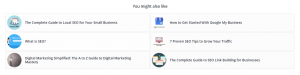
All you need to do now is make sure that the posts it shows are actually related and not random. Unrelated content is less likely to engage customers and may mislead crawling bots.
As you continue creating fresh content for your audience, you may find yourself deleting or updating some of your old pages. That process will result in lots of broken internal links on your website, which can hurt your growth.
Why?
Here's the thing...
While internal links can boost your conversion rates and help your SEO rankings, broken links will do the exact opposite. They'll create a negative browsing experience for your users, decrease your session time, and waste your link juice.
That's why you need to fix all your broken links by either updating or deleting them.
Here's how you can do that:
For starters, you need to find all the broken links on your site. You can check that manually by clicking on links or using browser extensions to help you do that.
That approach might be counterintuitive if you have hundreds of pages on your site. So, it's better to use Google Analytics to find all your broken links.
To do that, go to Behaviour > Site Content > All Pages.
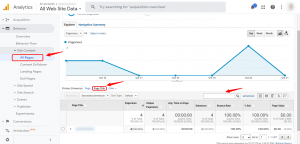
Next, choose Page Title as your primary dimension and enter "404 Not Found."
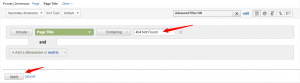
You'll get a long list of all the broken internal links on your website. You can download the full report and move to the final step.
Next, you can either:
Nofollow links are links that do not pass link value from one page to another. They'll allow you to save link juice for high priority pages that need to rank high.
To create a nofollow link, all you have to do is include the rel=" nofollow" tag in your HTML code.
You can use nofollow links whenever linking to pages that Google bots shouldn't visit, such as your login page.
<a href="login.php" ref="nofollow"> Login </a>
That tells crawling spiders that the page isn't important and shouldn't get any link value.
Planning the best internal linking strategy for your business can be complicated. But, you don’t have to work out the perfect internal linking strategy from the beginning.
Start by linking your topic-related pages together and try to establish a clear hierarchy between them. Be sure to follow the techniques shared in this guide to help you move forward.
Need help growing your business with SEO?
Get started today by getting a free growth marketing analysis to discover untapped growth opportunities. Give us a call at 807-890-1909, and we’ll be happy to discuss your project needs.
Due to its' importance, Google is often intolerant of anyone using sneaky tactics to beat the system.
But unfortunately...
There are lots of unanswered questions about the legitimacy of the link building strategies you read online. Many webmasters find themselves out of business overnight due to a backlinking strategy they didn't know was illegal.
That's why it's super crucial for any webmaster to learn about black hat link building and its' effects on SEO. And that's exactly what we're going to teach you in today's guide.
Let's dive in.
Black hat SEO is a set of shady SEO tactics used to improve a site's performance in the SERPs.
These techniques do not comply with search engine guidelines and policies. Thus, they're considered illegal because of how they trick Google to rank higher.
Black hat SEO link building is one of those sneaky techniques. It includes many methods such as PBNs, paid links, blog comments, etc.
We'll explain each one of those later in this article.
But first, lets consider whether black hat backlinking can deliver results.
Black hat SEO link building will always work — until it doesn't.
The promise of fast results and quick rankings is true, for the most part. You can sometimes get your pages to the first page of Google within months from using black hat methods.
You'll get new traffic to your website and see your numbers going up each week.
However…
What many SEOs don't know is that those results are only temporary and can never be sustained. Once search engines identify your links as illegal, you'll lose all your hard work and rankings overnight.
That can happen in a few different ways depending on the nature of those illegal backlinks.

For the most part:
Google may roll out an update that targets spammy backlinks and low-quality content. Such updates are often launched to improve the content quality on the first pages.
That's exactly what happened with the Penguin update in 2012 when Google decided to put an end to illegal links. All websites with unnatural backlinks lost their rankings, allowing for better content to rise to the top.
In other times:
A webmaster may receive a manual Google penalty that explicitly addresses their backlinking profile. That puts the website in a tight situation as Google no longer trusts its' content and backlinks.
In such cases, the site owner will need to submit a reconsideration request to Google.
It may take up to three months for the website to recover from the penalty. Even worse, it will lose most of its' rankings and traffic.
Search engines declared war on spammy links decades ago. Developers have been working hard to put an end to anything that might lead to a negative experience for the user.
Google considers backlinks a reliable measure for high-quality and relevance. After all, link building remains one of the most essential SEO strategies to improve rankings.
So if manipulative links aren't dealt with, they'll have a huge negative effect on search results.
Spammy links are misleading to both Google and its' users.
For example:
When someone searches the net for a specific term, they expect to get the best results as quickly as possible.
If some of the top sites offer low-quality content while using spammy backlinks, they'll still get to the top.
As people start noticing how unhelpful the search results are, they'll decide to try out other search engines the next time.

Besides:
Imagine building a website for your business from scratch and creating awesome content to help your prospective clients.
A competitor following black hat tactics will sometimes rank over you in the SERPs, even when they don't deserve to.
That explains why black hat SEO is illegal and why it's heavily punished by search engines whenever discovered.
As a webmaster working hard to grow your business, you may come across various SEO methods that can help you succeed.
Unfortunately, some of them are unethical and won't work in the long term.
And what's worse?
Google can't tell if you're following those strategies by mistake or on purpose, but either way you'll still be penalized.
Here are five black hat backlinking techniques you must avoid like the plague:
Many webmasters and SEOs are paying to get links from authoritative sites. It's a quick way for them to get a boost in their SERPs rankings and increase traffic.
Such backlinks do work, and they're the hardest to detect by Google since there is no proof for the transaction.
However…
Whether this is done through low-quality guest posting or direct link buying, Google will eventually catch you. And once that happens, your website may never see the light again.

Buying links that pass PageRank is a violation of Google's webmaster guidelines because such links are considered manipulative.
So:
You should never pay high-authority sites to link to your website. Instead, try building genuine relationships with their owners so you can build links ethically.
When a domain name expires, it doesn't lose its' linking authority. Yet, anyone online can buy it and take advantage of its' link power.
So, what does that have to do with private blog networks?
A private blog network (PBN) is a collection of domains owned by a single person or company and used to generate links to a primary domain.
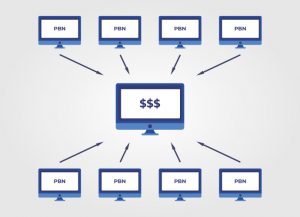
Each of those websites is full of thin, duplicate content that tricks search engines into believing that it's a live site running on fresh content. These PBNs will then be used to create different links to the primary website to boost its' authority.
Black hat SEOs following this method often face the worst ending.
That's because their backlinking profiles are built mainly on a few high-authority sites. So when they get penalized, they lose all the domain authority.
Forum signatures appear below threads or replies that users leave on online forums. Many webmasters use this method to create backlinks by joining industry-related forums.
Most forum owners make their external links "nofollow" to prevent them from passing link juice. That helps them keep signature links to a minimum.
The thing is:
If you include links to your site in your signature, you'll generate hundreds of spammy backlinks. They'll all have the same anchor text and URL, which is a red flag for crawling spiders.
Google has officially stated that forum comments and signature links are a violation of their guidelines.
Most users create them in the hope of increasing their domain strength, which makes them unnatural to search engines.
So...
Stay away from forum signature links to avoid any unnecessary penalties.
There was a time when blog commenting was an effective technique to build backlinks.
All you had to do was find unique blogs to comment on, then write a short comment with a link to one of your web pages. Do that a few dozen times each day, and you'll notice your site ranking better within months.
Thankfully:
Search engines were quick to realize the damage caused by such practices. And ever since, links built through blog commenting have lost their SEO value.
Today, spammy blog comments no longer work and are considered a black hat tactic by expert SEOs.
Sites built on free blogging platforms such as Blogger and Blogspot no longer pass link juice to external websites. It's almost impossible to find a Blogspot site ranking on the first page of Google today.
Link exchange has always been an efficient backlinking strategy, especially if you're getting started. You can contact a webmaster in your industry and ask for a link exchange to help both of your businesses grow.

However...
Excessive cross-linking, where links are regularly exchanged between the same two webmasters, will negatively impact their site rankings.
Search engines will detect the cross-linking and penalize both sites for it.
What should you do instead?
It's simple.
Reach out to a few dozen webmasters in your industry for link exchanges.
This method allows you to maintain a diverse backlinking profile. Your inbound links seem more natural, which makes them more appealing to search engines.
Black hat SEO may seem enticing to many site owners, especially if they're just getting started. But getting a penalty from Google is the worst outcome your website can get in today's internet-driven economy.
So...
Avoid the shady methods we discussed in this article. And be sure to read carefully through Google webmaster guidelines to learn more about the dos and don'ts of link building.
Ready to double your traffic and sales with SEO?
HighMark SEO is ready to help you skyrocket your business with a team of devoted digital marketing specialists.
Give us a call today at 807-890-1909, and we'll be happy to discuss your project needs.
Content marketing is one of the most effective strategies to grow your brand today. Consequently, more companies are competing to take advantage of the opportunities that content marketing has to offer.
Needless to say...
Growing your business through content creation goes beyond publishing a few articles on your blog. It’s a complex process that requires lots of planning and flawless execution.
In this guide, we’ll answer the most important questions you have about content marketing. We’ll also share with you a detailed, step-by-step process to creating a content marketing strategy that delivers.
Ready?
Let’s jump right in.
Content marketing is a modern marketing approach that focuses on creating the right content for the right audience. One of its key aspects is providing value to the customer through relevant content that is consistently created.

This helps businesses attract quality customers and keep them engaged with their brands.
That's why the biggest companies have adopted content marketing as the ideal strategy to enhance customer loyalty.
A content marketing strategy answers all the questions surrounding your content creation. It goes beyond the type of content you’ll create and focuses on helping you automate the process in the future.
Creating an effective content plan can be a long process and may be hard to accomplish. It will take time, effort, and lots of trial and error.
But once done:
Your content strategy will be much more practical and bring you measurable results.
A solid content plan serves as the roadmap that will guide you to succeed with content marketing.
Here’s the deal:
It's always better to start with a bad plan than to proceed with no plan at all. And it's essential for any business to be clear on its goals and set KPIs it can track right from the start.
Why?
Because having a content strategy helps you focus on what matters most for your business. It allows you to track and optimize your progress while gathering and implementing feedback continuously.

That's a vital step to producing better content.
Also:
Your content strategy will help keep everyone in your company in alignment with the vision. It will provide you and your team with all the answers you need when creating new content.
So, that will save you a lot of time in the long run.
Let's be completely honest here…
Content marketing used to be a lot easier because there wasn't much competition as there is today. Also, people were new to the internet. So that made them hungrier and more willing to consume any type of content that comes their way.
However:
Things have gotten a bit more difficult.
More and more content is being created every day by companies and individuals all over the world. And customers are more hesitant to consume anything while their attention spans get shorter.

Despite all that, content marketing is still preferred by online consumers.
70% of businesses are actively investing in a content marketing plan (Hubspot). And those efforts are generating 3x more leads compared to other forms of marketing (Demand Metric).
So, yes…
Content marketing works!
There's still room for your brand to adopt content marketing and use it to succeed. It's a sustainable approach to growing a business today because it can still yield results for long years to come.
Any type of content you publish online to attract new clients is an example of content marketing. For instance, the post you're reading now is an informative article we created to generate interest in our brand.
The most famous examples of content marketing are:
There's a wide variety of content marketing options available for your company today. So, you can use any type of content you want to boost brand awareness.
The answer to this question depends on many factors — including your target audience, industry, type of content, marketing channels, etc...
And guess what?
There’s no universal template for all businesses to use when making their content strategy. In fact, it’s important for your content creation strategy to be unique to your goals, objectives, and target demographic.

Your content marketing plan should detail your:
In the rest of this guide, we’ll cover these steps in more depth and explain why each one is important to your strategy.
This step helps you focus on what matters in the long haul.
If you know your goals first, it will be easier to develop an efficient strategy to get you there. But if you have no idea where you're going, you'll never get anywhere.
Businesses strive for different aims based on their business model and execution.
For instance, your company may set the following goals:
No matter what your goals are, be clear on them from the start. That allows you to stay on the path and implement feedback later on.
And remember:
Keep your objectives quantifiable with tangible metrics and precise numbers.
Instead of saying, "we want to boost conversions", you might say, "we want to increase email sign-ups by +50% before 2021."
This approach allows you to compare your results with more precision later.
You can't succeed with your content marketing without identifying your target audience.
Why?
Because value-first content is all about relevance.
If you don't know who you're making content for, you'll never understand their needs and struggles. So that will keep you from creating noticeable work that attracts and converts.
Now:
If you're just getting started and don't have much data, identifying your audience based on interests is enough. You'll target a broader audience that's likely to engage with your brand.
As you gather more insight, you can take this to the next level by breaking down your customers based on demographics.

One way to go about that is by using Google Analytics to find out more through the "Audience" tab. You'll get all sorts of details — including age, gender, location, interests, device, etc.
Another way to identify your focus group is by asking for feedback from your customers. That's an excellent way to tap into their minds and understand their needs and challenges.
There are dozens of marketing channels you can focus on when developing a content strategy for your brand. Each one is different in the audience it offers and the preferred content format.
At first sight, it might seem like a good idea to do them all at once.
After all, that should maximize your chances of success and yield better results... Right?
Wrong!
A content marketing strategy is a long-term plan with real investments involved, including time and money. So, you should develop a sustainable, results-oriented approach that will guarantee the best outcomes.
SEO is a critical marketing channel for most businesses as search engines remain the biggest source of traffic on the internet today. Therefore, you must publish quality content regularly on your blog.
Social media marketing can be powerful as long as you choose the right platforms to be on.
However, it is hard to tell that from the start. And it's never the case that your target audience is present in equal portions across all platforms.
So, try different ones for some time, then stick to the ones that bring the best results.
Email marketing works wonders for lots of businesses as long as it's well implemented. And although it takes time, it can guarantee the highest conversions from your most loyal customers.
You'll face many doubts as you continue to move forward in your content marketing journey. There is a lot to keep track of and too many unanswered questions at the start.
You might be wondering:
The thing is:
You can't reinvent the wheel on your own from the beginning. There are too many variables in play, making it impossible to hit all the right nails in the head.
That's when having competitors becomes a blessing!
There are lots of tools and techniques to identify your competitors and analyze their processes. But as a start, we prefer sharing with you free strategies to keep your costs low.
Our favorite approach to this is simple:
Let's look at your competition in terms of "attention" instead of "profits."
Think about that for a moment...
What you'll realize is that anyone creating content similar to yours is your competitor. They don't have to sell your product or services. They just need to focus on your content marketing goals.
So, you'll use that to study your competition and identify what's working for them.
You can check who's ranking at the top of the SERPs using your target keywords. This step should give you a clear picture of who you're competing against in your content creation.
Also:
Be sure to look into your competition on social media to see which posts generated the most interactions. What type of content is getting the most shares? And what topics are getting the most comments?
This step is directly tied to your marketing channels, as that defines the type of content you'll create in the future.
The most popular content types today are:
Each of them will require specific skills to create and publish — whether it's research, graphic design, copywriting, etc.
For example:
If you want to create an infographic, you'll need thorough research on the subject.
You must then give the content to a graphic designer who'll turn it into an eye-catching visual you can share with your followers.
Or maybe you're starting an email newsletter.
It takes a lot of planning and writing before you can send an email. You must then have someone integrate that into an automation tool, schedule the campaign, etc.

So, be sure to detail in your content plan answers the following questions:
We suggest that you get started with blogging because it's a must for any business today.
Publishing fresh content helps increase your authority in the SERPs and improve your SEO rankings. And since it's hosted on your website, it's also an efficient way to boost your conversions and sales.
You’re almost there!
You’ve identified your target customers and the type of content you want to create for them. You know where to find them online and what topics they’re most interested in.
Now, it’s time to get everything in order.
The biggest challenge you’ll face when creating content for your brand isn’t outshining your competition or connecting with your audience.
It’s lack of structure…
Not knowing what to do next is the reason most content plans fail.
That’s why this step is more than necessary.
A content calendar is an organizational document that details everything about your content strategy.
It answers questions like:

Having such a schedule will provide precise answers to help you stay on track. And taking the time to do that will save you a lot of headaches in the long run.
To help you and your team stay organized, we suggest using free content management tools — such as Google Docs, Google Sheets, or Trello. They’ll grant you all the clarity you need to keep the team more motivated to work consistently.
It’s now time to sit back and watch.
You’ll use the marketing goals you set at the beginning to assess how your content is performing. And through that, you can make educated guesses on how your content plan could improve.
But how do you track your results effectively?

Here’s all you have to do:
You must set up a Google Analytics for your website at the beginning. Then you’ll use its reports to evaluate your progress and track your key metrics.
Read our comprehensive beginner’s guide on how to get started with Google Analytics.
Also:
You must pay attention to how your followers are reacting to your content on social media.
Are they interacting with your posts and leaving comments? Do they click on your links? Are they reaching out to you through direct messages?
More importantly:
Your SEO rankings will also tell you a lot about some critical aspects of your marketing plans. That includes your targeted topics, keyword research, link building strategy, etc.
Is your content ranking high on the SERPs? Did you notice an increase in organic traffic after implementing the new strategy?
If you're waiting for your content to be perfect before you can share it, you'll never publish anything. You'll fall for analysis paralysis and never take any action to move your business forward.
The biggest brands in the world understand this very well. That's why they've decided to incorporate feedback implementation as part of their content marketing plans.
You'll never know 100% what works and what doesn't, but your audience does.
So, why not learn from it?
Start creating content and watch continually how your audience is interacting with it.
After that, implement the feedback by improving what's not bringing the best results and doubling down on what's working.
So this is it… You’ve now created a rock-solid content marketing strategy for your business. It will help you keep on track and execute your marketing plans successfully.
But don’t forget:
Flexibility is essential when implementing your content plan. You never know what works for sure or what results to expect. So, be adaptable to change and listen to what your customers want to tell you.
Ready to increase leads for your business with the help of an SEO agency in the USA?
We’re at your service!
Get started now with a complete by scheduling a time to chat. Don’t hesitate to give us a call at 807-890-1909 to learn more.
Updated 6/11/21